An AI analyst can read a commercial real estate deal end to end on its own. Three things it never does alone: it signs nothing, it writes to no one outside your firm without your ok, and it spends nothing. Everything else on this page is how those three lines are held, and how the line moves when you decide it should.
Why an analyst needs a job description
People who ask whether an AI agent can run due diligence end to end usually mean two different things. One is the reading: open the package, check the rent roll against the T-12, compare the asking cap rate with the market, find what the broker left out. The other is the acting: write to the broker, order a report, put a number in a letter of intent.
The reading is the job. The acting is where a new hire, human or not, is kept on a short leash until the firm has seen their work. A first-week analyst at your firm does not sign a letter of intent or email the seller's broker with a counter on their own, however good their model is. We hold ours to the same standard, and we hold it in the product rather than in a promise.
What it does on its own
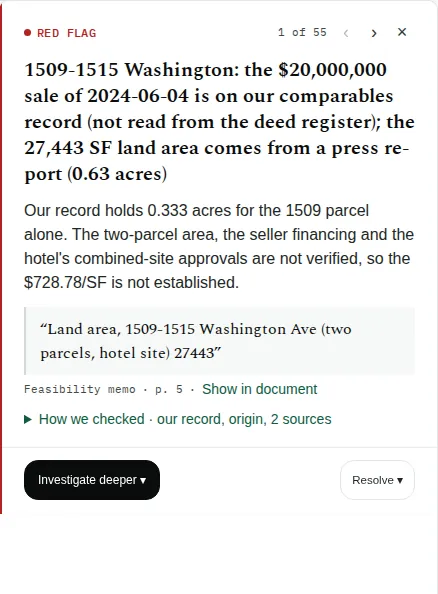
Forward a deal, as it reached you: the offering memo, the rent roll, the T-12, the broker's email. The analyst reads all of it and sends back a review in the same thread. What holds up and what does not, each finding marked on the memo's own page with the quote it rests on, every figure with where it came from, and the files attached.
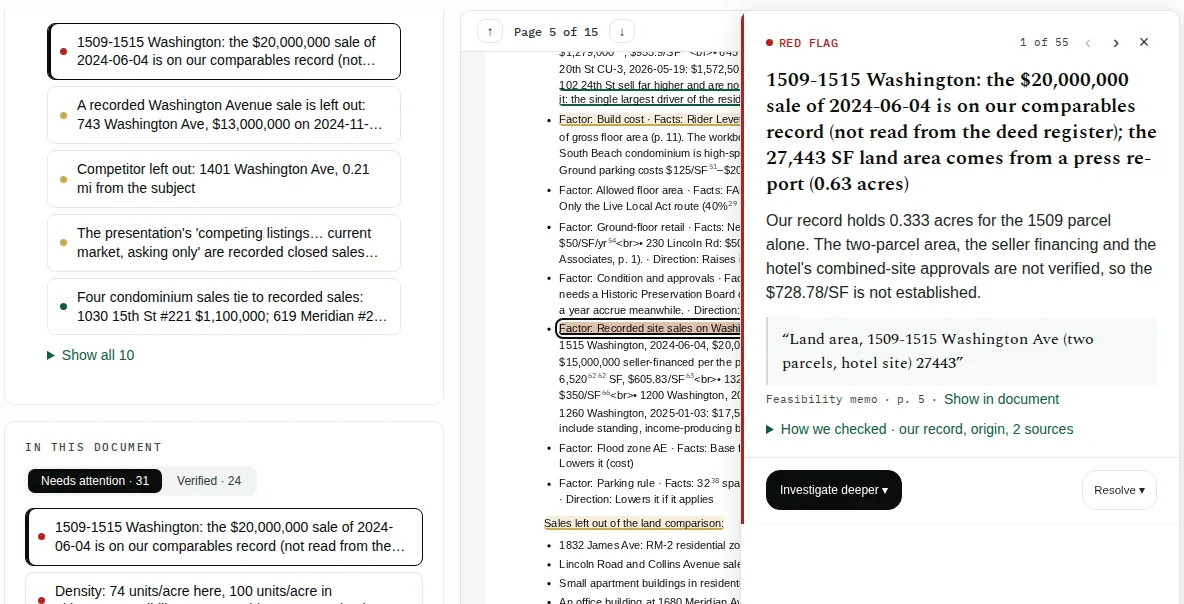
That covers the property side of diligence: the record, the comps, the rents, the income, a value opinion and an underwriting with a live Excel model. It runs without anyone on your team logging in, at night and on weekends, and it does not wait for permission to read.
The three things it never does alone
It signs nothing
No letter of intent, no contract, no opinion signed in your name. A value opinion from Titleman is a first read for your team, not an appraisal, and an underwriting memo is the analyst's view, not your committee's decision. A licensed professional on your side reviews and signs anything that needs a signature.
It writes outside only with your ok
No email to a broker, a seller or a lender on your behalf until you say so. In the product this is a hold, not a habit: a letter to a counterparty outside your firm is built, logged and then held until a person approves it. Once approved, it goes once, with at most one follow-up per counterparty, and the list of addresses that asked not to hear from us is read before anything leaves.
The analyst can draft that letter for you, and often should: the information request for the missing rent roll months, the question about the expense reimbursements that do not add up. You read it, change what you want, and say "send." Or you send it yourself.
It spends nothing
No purchase, no order, no payment. Every channel that costs money to use has its own daily spending limit, and a channel with no limit set is refused outright: the default is no, not "whatever it takes." During probation, nothing is bought on your behalf at all. If a deal needs something only money can get, the review says what is missing and what it would take, and the decision is yours.
Where your red lines fit in
The three lines above are ours, and they are the same for every client. Your firm has its own: asset types you never buy, markets you stay out of, a debt yield you will not go below, a sponsor you will not back again. Name them in week one and they are written down as rules for your firm.
From then on, every review checks the deal against them and says so when one is crossed, in your own words. The analyst does not decide to pass on the deal for you. It tells you, first, that it crosses a line you drew, and you decide what to do about it.
How the line moves
Authority grows only as your trust does, and only when you extend it. The way it widens is deliberate and written down, one step at a time, for example:
- "You may send our standard information request to the listing broker on any deal we forward, without asking."
- "You may book the market rent study on deals in our three core markets."
- "On deals under 20 million, send the first pass to the associate directly."
Each step is a rule for your firm, like a correction. You can take it back with one reply, and the next review follows the change. What does not change is the default: anything you have not extended stays read and review.
That is also how the role grows over time, from probation to the deals you choose, to every deal that reaches you, to a senior analyst who prepares the deal for your investment committee. From probation to a team of analysts walks through it.
What this means for a probation week
During a 7-day probation, the analyst reads every deal you forward and writes reviews; it does not contact anyone outside your firm and it buys nothing. On day 1 you give it the first deals and your red lines; on days 2 to 5 you correct its reviews by reply; on day 6 you get a report with the deals reviewed, how often the review matched your own analyst and how many corrections were applied; on day 7 you decide. How your analyst learns shows the loop that turns those corrections into rules, and your data stays yours covers what happens to the files you forward.
If you would rather see the analyst on a deal of yours first, book a demo.
Updated 22 October 2026. Written by the Titleman team with AI assistance.
FAQ
Is there an AI agent that does commercial real estate due diligence end to end?
The reading, yes. Titleman reads the offering memo, rent roll and T-12, checks each claim against the property record and the market, and returns a review with every figure sourced and the files attached. The decisions stay with you: it signs nothing, writes to no one outside your firm without your ok, and spends nothing.
Can an AI analyst email a broker or a seller on my behalf?
Only after you say so. A letter to anyone outside your firm is held until a person approves it, and even then it goes once, with at most one follow-up per counterparty. Addresses that asked not to hear from us are checked first.
Can it order a report or pay for data?
No. Every paid channel has its own daily spending limit, and a channel with no limit set is refused outright. During probation nothing is bought on your behalf.
Does it sign an opinion of value or a letter of intent?
No. A value opinion or an underwriting memo is a first read for your team. It is not an appraisal, and a licensed professional on your side reviews and signs anything that needs a signature.
How does its authority grow?
Only when you extend it, in writing, one step at a time: for example, "you may send our standard information request to brokers on deals under 20 million." Until you say so, the default is read and review.